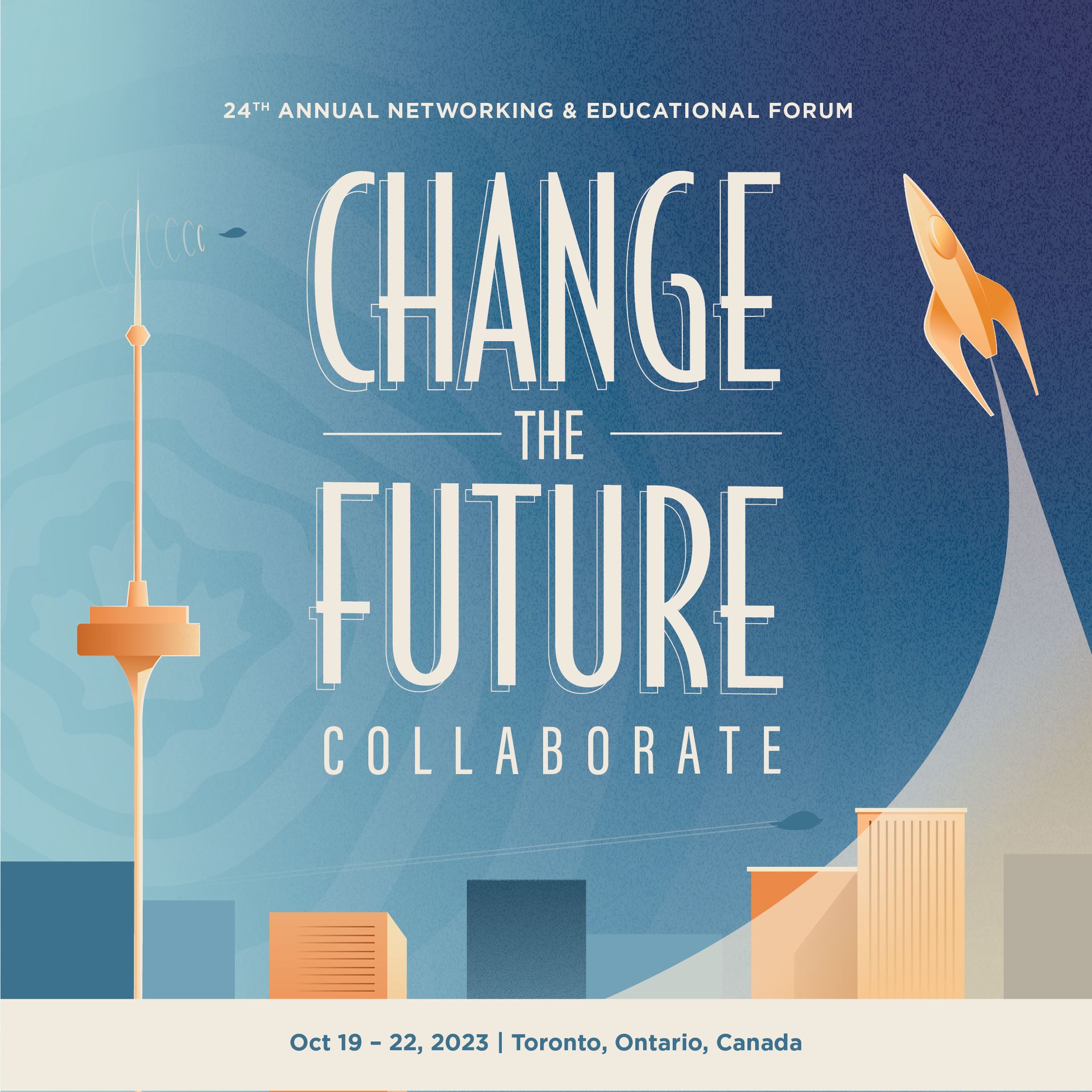
24º Foro Anual de Redes y Educación de la IACP: Cambie el Futuro Colaboración - Cómo Importan el Cambio Global y las Redes

La Academia Internacional de Profesionales Colaborativos (IACP) se llevó a cabo del 19 al 22 de octubre de 2023 en el Westin Harbour Castle en Toronto, Ontario, Canadá y fue un gran éxito.

Este es un momento en el que los miembros de la IACP de todo el mundo se reúnen anualmente para compartir nuevas ideas y pensamientos sobre cómo “nosotros”, como comunidad unida, podemos difundir el mensaje de la colaboración. Es un momento para que compartamos, crezcamos y aprendamos de nuestros compañeros. Sin embargo, la IACP está a la vanguardia de cambios interesantes                                                                                  

CAMBIOS

¿Qué es exactamente el cambio? El cambio se define como un proceso de transformación, transición y sustitución. Dicho esto, un cambio que la IACP está inculcando es que no habrá reuniones futuras como se hacía tradicionalmente en el pasado. Más bien, la IACP iniciará conferencias regionales en todo el mundo. Además, en el sitio web de la IACP, se podrá hacer clic en un marcador en un mapa para ver fechas, horas y enlaces de registro. Aunque el cambio puede resultar difícil para muchos, es algo bueno con la visión adecuada y con visión de futuro y con el equipo adecuado. Brian Galbraith, LL.B., presidente de la IACP, entregó el reinado a la  nueva presidenta de la IACP, Julia McAninch, Psy.D quien compartió noticias interesantes sobre los acontecimientos futuros de la IACP. Julia expresó su gratitud a Brian por su tutoría en la preparación para su nuevo rol. Brian capeó con éxito la tormenta que afectó a la IACP debido a la pandemia de Covid sin precedentes en todo el mundo y todos los miembros estaban y siguen estando muy agradecidos por sus excepcionales habilidades de liderazgo. La IACP continúa avanzando hacia cosas más grandes y mejores en el futuro.

BENEFICIOS

Algunos de los beneficios que ofrece IACP son:

  1. Se están logrando avances para un mayor crecimiento internacional y alianzas en todo el mundo.
  2. Aprender sobre diferentes capacitaciones colaborativas para fortalecer aún más los grupos de práctica colaborativa en todo el mundo.
  3. Crecimiento de la formación de profesionales por parte de formadores colaborativos de un amplio espectro de localizaciones para elegir.

Y mucho más.

REDES

El foro permitió realizar muchos eventos de networking, dando a los miembros tiempo para ponerse al día no sólo a nivel profesional sino también a nivel personal. La colaboración se trata de personas que trabajan juntas, especialmente en un esfuerzo intelectual. IACP lo lleva a una forma completamente nueva, haciendo que todos y cada uno se sientan parte de una forma de vida mejor y más grande. Es casi como si todos fuéramos una gran familia feliz. Muchos miembros estaban muy emocionados de conocer finalmente en persona a personas con las que se habían estado comunicando sólo virtualmente. Otros hicieron nuevos amigos y aprendieron cómo se practica el derecho colaborativo en otros países. Una de las ventajas de la colaboración es que permite que equipos interdisciplinarios de todas partes del mundo se reúnan y sean creativos para ayudar a resolver diferencias. Actualmente, los miembros de la IACP en todo el mundo incluyen: Australia, Austria, Bermudas, Brasil, Canadá, Chile, República Checa, Alemania, Hong Kong, India, Irlanda, Israel, Italia, Japón, Malasia, Países Bajos, Nueva Zelanda, Panamá, Singapur, España, Suiza, Emiratos Árabes Unidos, Reino Unido, Estados Unidos y sigue creciendo. Independientemente hacemos pequeñas diferencias, pero juntos formamos alianzas fuertes y desencadenamos grandes cambios.

FOROS EDUCATIVOS

El orador principal de la IACP fue el Dr. Brian Goldman y su presentación fue muy reveladora para muchos. Utilizando la analogía de un grupo de profesionales médicos para explicar la importancia de la colaboración. El Dr. Goldman también habló sobre cómo los juegos pueden fomentar relaciones más sólidas entre los profesionales. Imagínese que algo tan simple como un juego de formación de equipos puede generar unidad y colaboración.

No es raro que muchos profesionales den generosamente su tiempo como presentadores en estos foros. Las presentaciones abarcaron una amplia gama de temas de colaboración. En concreto, Loretta Gephart, M.A. y Abogado Ross M. Evans presentaron el taller “Creación y mantenimiento de un grupo de práctica exitoso: habilidades de liderazgo para líderes de grupos de práctica”. Empoderaron a diferentes líderes de grupos de práctica con conocimientos, habilidades prácticas y recursos para avanzar aún más en sus habilidades de liderazgo y facilitar el crecimiento de su grupo de práctica. El objetivo final era poder coger pequeñas pepitas de estas presentaciones y llevárselas a casa para aplicarlas en tu práctica profesional. Lo que es aún mejor es que los miembros siempre estuvieron abiertos y dispuestos a ayudarse unos a otros cuando fuera necesario. Por ejemplo, poder levantar el teléfono y realizar una llamada rápida para pedir ayuda sobre un tema difícil de un caso. Verdaderamente un “ganar-ganar” para todos. Lo más importante es que la capacidad de fomentar conexiones profundas con otros profesionales colaborativos con ideas afines y al mismo tiempo impulsar el cambio es alucinante.

DESTACADOS ESPECIALES Y AGRADECIMIENTOS

Durante una de las tertulias se entregaron reconocimientos especiales a Kevin Scudder, Abogado Colaborador, que en paz descanse. Todos los integrantes se pusieron de pie en su honor y cantaron una canción en su memoria que generó muchas emociones sentidas. Para rematar el foro, una noche llena de diversión generó muchas risas y bailes con música en vivo mientras se disfrutaba de una cultura cruzada de comidas para la cena. Qué mejor manera de finalizar el foro de la IACP y capturar recuerdos para toda la vida. ¡Únase a nosotros mientras viajamos por todo el mundo, de una manera completamente nueva!

Un agradecimiento especial a Dolores Puppione, Jasmine Polk, Lynda Robbins y Shannon Grossi y otras personas por su apoyo inquebrantable para garantizar que todo transcurriera sin problemas durante todo el Foro. Y, cuando se hizo una solicitud, sin dudarlo, estaban listos para brindar un servicio excepcional.

¿QUÉ ES LO SIGUIENTE?

Si está listo para avanzar y resolver su conflicto de manera respetuosa, digna y privada con un equipo de profesionales colaborativos internacionales, comuníquese para obtener más información en: https://www.collaborativepractice.com/. Y, si necesita un equipo de profesionales colaborativos de habla hispana, visite: http://www.hispanocollaborativepros.com o envíe un correo electrónico: info@collaborativeprofessionalpros.com.

Betsy Vázquez es la Fundadora de Vázquez Law, Mediate4Peace, y Presidenta del grupo de práctica Hispano Collaborative Professionals™ (HCP). Ella es una Abogada de Familia Colaborativa, Planificación Patrimonial Antes, Durante y Después del Divorcio, Abogada de Derecho de Personas Mayores, Abogada Personal de Familia®, Coordinadora de Crianza Calificada y Mediadora de Familia y del Condado Certificada por la Corte Suprema de Florida. Betsy es nativa de Florida, de ascendencia Hispana, madre y dedicada a ayudar a otros a resolver conflictos de una manera mejor y más saludable. Para comunicarse con Betsy visite: www.bvazquezlaw.com o llame al: 305.440.1888 (1+ Estados Unidos).
By K. Malaika Walton, IACP Executive Director June 25, 2026
IACP seeks to partner with an organization to host an international Collaborative Practice conference in 2027 outside of the United States or Canada.
By William Hogg LL.M June 10, 2026
Reflection from William Hogg LL.M: I am writing this on the flight back to London, which probably explains the slightly scattered nature of what follows. I have just spent three days in Basel and I am still letting it all sink in. I had been looking forward to this conference for a long time. It did not disappoint. Basel was a wonderful setting, and the programme gave us a lot to think about. There were moments where the quality of discussion really stood out, not because it felt overly polished, but because people were speaking from experience. From 4th to 6th June, I joined professionals from across Europe for a conference on ethical challenges in Collaborative Law and Practice, hosted by Collaborative Law & Practice Switzerland together with the European Network for Collaborative Practice . As a board member of the ENCP, and of the Family Mediators Association here in the UK, this is a community I have been part of and championed for years. Being in Basel with so many of its members in person was a genuine pleasure. Lawyers, mediators, financial advisers and coaches. People who spend their working lives with families at the worst moments those families will ever face. There was something unusual about being in a room like that. Everyone seemed to be there for the same reason, and it was not really a commercial one. They wanted to know how to do this work better. How to cause less damage. How to help people get through separation with a bit more of their dignity intact. That is what I have come away thinking about most. We tend to talk about family law in technical language. Disclosure, negotiation, orders, hearings, outcomes. All of it matters and none of it is going away. But underneath every one of those words is a person who is frightened, grieving, or watching a future they had planned for simply dissolve. Collaborative Practice starts from that fact rather than working around it. It asks us to care about how someone arrives at the answer, not only what the answer is. For anyone who has not come across it, Collaborative Law is a structured way of resolving family matters without going to court. The clients and their advisers agree to work things out around a table. It relies on honesty, good preparation, and a genuine willingness to solve the problem instead of trying to win. That idea is not new. What felt new in Basel was how hard people are now pushing on the detail. How do you build a proper team around a client. How do you spot a power imbalance before it does harm rather than after. How do you let a child's voice into the process without putting a child in the middle of it. How do you adapt when the person across the table is anxious, neurodiverse, or so overwhelmed they can barely take in what is being said. These are not seminar questions. They are the things that actually decide whether a case goes well or badly. The ethics theme ran through all of it, and rightly so. In Collaborative work ethics are not a footnote. They are the foundation. If one person does not feel safe enough to speak honestly, the process has already failed, however civilised it looks from the outside. If the advisers lose sight of who they are really there to serve, the trust that holds everything together starts to go. A room can be perfectly polite and still be deeply unfair. The same point kept coming back in different sessions. Goodwill on its own is not enough. You need skill, you need structure, and you need to keep questioning yourself. You have to be confident enough to give your client proper advice, and disciplined enough not to throw petrol on the conflict while you do it. You have to ask your client to be open, while accepting that openness is only possible if you have built the conditions for it. That is the part I find genuinely exciting. The principles are old. The way the ENCP and its members are developing them across Europe feels very much alive. There is a real appetite to keep improving, to borrow from how other jurisdictions do things, and to keep asking the uncomfortable question of whether the process is actually helping the families who use it. I came away energised and proud to be part of this community. A special mention to some of the standout contributions over the three days. Shireen B. Meistrich from the US, was excellent, as were lawyers Marc Sheridan and Jacinta Gallant , and Alicia Farran of Our FamilyWizard in the UK. Federica Marabini , Michela Tonini and Sofia Tremolada gave a superb group presentation as a Collaborative team from Italy, and Swiss speakers Titus Thoma and Stefanie Santschi rounded things off beautifully. Thank you all. You are a large part of what made the three days so worthwhile. One thing I keep returning to is that Collaborative work refuses the assumption that separation has to be a fight. Plenty of cases do need a courtroom. Some clients need the protection that only a court can give, and I would never pretend otherwise. Collaborative Practice is not for everyone, and anyone who sells it as a cure for everything is overselling it. But for the right people it can change everything. It gives them somewhere to be supported without being backed into a corner. It lets the hard conversations happen with someone in the room to guide them. It nudges everyone to look past the argument in front of them and towards the life the family still has to live. That matters most when there are children. Two people might stop being a couple and still have to spend the next twenty years being parents together. How the legal process is handled can make that future a little easier or a good deal harder. So, I am grateful to the organisers for three genuinely valuable days, and reassured that there is a serious, thoughtful community of people across Europe who care deeply about getting this right. I am not bringing home one tidy lesson. It is more a reminder. Family law can keep evolving. An established process can still feel fresh when people apply it with imagination and a bit of care. And when professionals work together properly, with integrity and real concern for the person in the middle of it, the client is the one who benefits. That is how we try to think about family law at Laurus . The question is never simply what the legal route is. It is what the right route is for this client, this family and this particular moment in their life. Basel was a good reminder of why that question is the one that matters.
By Heather Theisen-Gandara May 3, 2026
A perspective on the three key areas in which divorce coaching adds value the broader ecosystem of divorce support and the Collaborative divorce process.
By Michael P. Sampson April 3, 2026
Learn more about the roots of Collaborative Practice which led to thousands of professionals globally help people resolve disputes respectfully out of court.
By Melissa Murphy Pavone April 3, 2026
This article explores how a proactive, team-driven approach can transform divorce from a reactive, adversarial process into a more intentional, amicable path forward.
By Ross Evans January 27, 2026
A blog about the role of practice group pods strengthening community in Collaborative Practice groups.
By Adam Cordover and Dr. Randy Heller January 8, 2026
Authors Adam B. Cordover and Dr. Randy Heller explain how teams around the globe can use the insights from a decade of survey data from Florida Collaborative matters
By Dr. Deb Gilman December 1, 2025
Twelve days. Two homes. One goal: giving your child a holiday season that feels safe, steady, and truly joyful.
By Ria Severance, LMFT November 19, 2025
Learn how a licensed mediating divorce specialists trained to collaborate – get you a cost-effective divorce that covers all your bases.
A woman is sitting at a table with her arms crossed and smiling.
By Dr. Randy Heller August 23, 2025
Kevin Scudder Higher Education Scholarship Fund, developed to carry on Kevin's legacy and train Law and Graduate students to become Collaboratively trained.